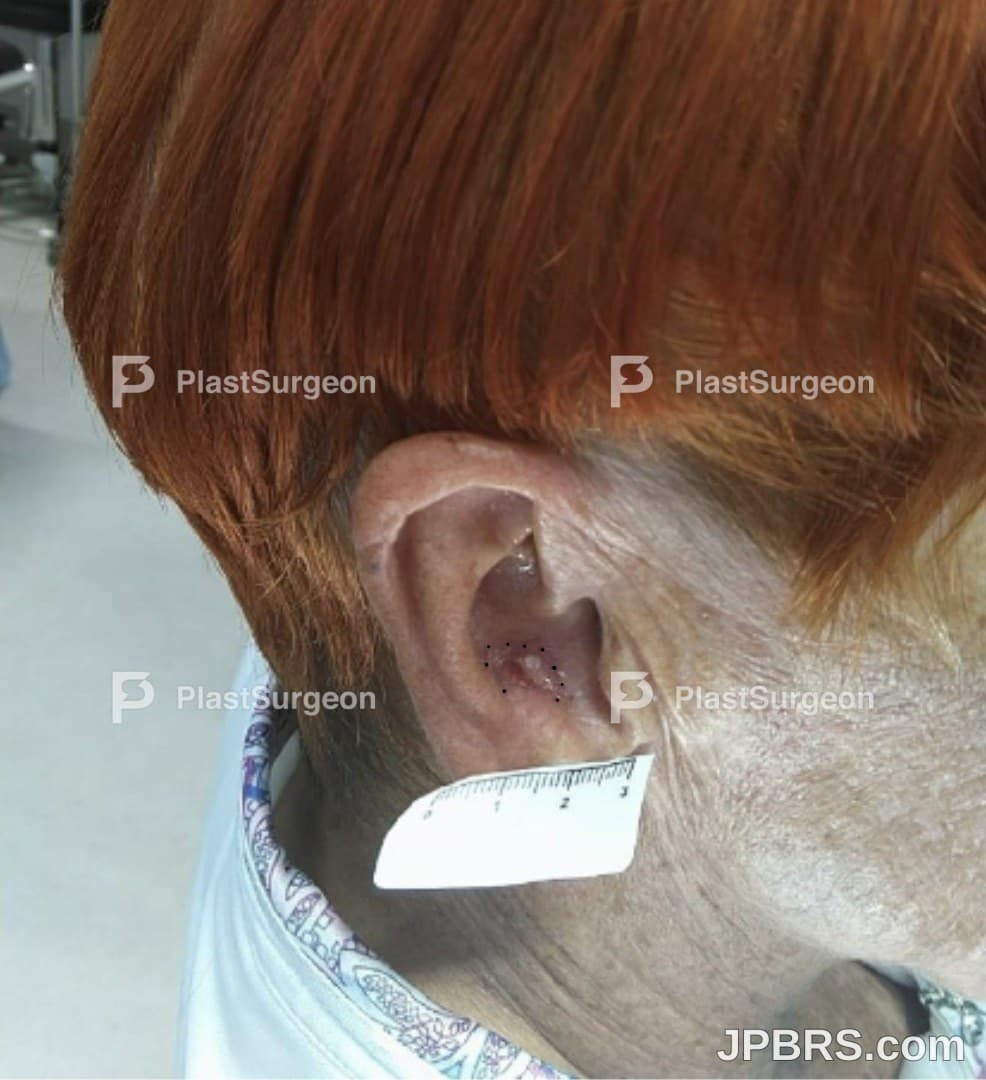
Case 7: Cervicofacial Flap for Cheek Reconstruction Post Excision of Pigmented Solid Basal Cell Carcinoma
Bertha Kawilarang, Agus Roy Rusly Hariantana Hamid, I Gusti Putu Hendra Sanjaya
Background: Basal cell carcinoma (BCC) is the most common skin malignancy, with the pigmented solid subtype being a rare variant. Surgical excision with clear margins remains the mainstay of treatment, but reconstruction of facial defects requires careful planning to optimize both function and aesthetics.
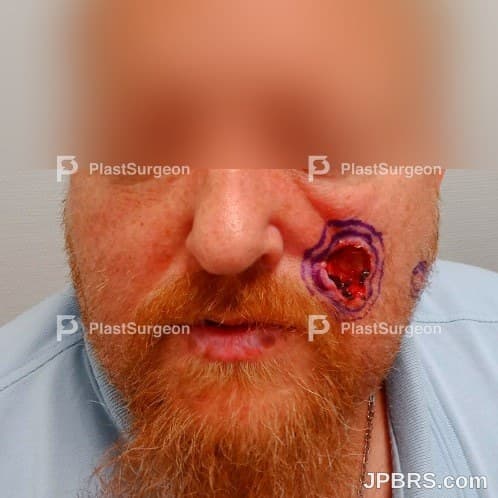
Case Presentation: We report a case of a 59-year-old female with a pigmented solid BCC of the right cheek. Wide local excision was performed, achieving histopathologically confirmed clear margins. The resultant defect, extending from the midface toward the nasolabial fold, was reconstructed using a cervicofacial advancement-rotation flap.
Novelty and Rationale: The cervicofacial flap was selected due to its robust vascularity, excellent tissue match, and ability to provide a tension-free closure with minimal donor site morbidity. The flap was elevated in a subcutaneous and sub-SMAS plane to preserve vascularity, primarily based on the perforators from the facial and transverse cervical arteries. Meticulous dissection in the preauricular and cervical regions allowed for optimal mobilization without compromising facial nerve integrity. A lateral undermining technique enhanced flap rotation and reduced standing cutaneous deformities, ensuring a natural contour.
Outcome: The patient’s postoperative course was uneventful, with complete flap survival and no complications. At the 6-month follow-up, there was no evidence of tumor recurrence, and the patient expressed high satisfaction with the functional and aesthetic results.
Conclusion: This case highlights the cervicofacial flap as a versatile and reliable option for large cheek defects following oncologic excision. Its excellent vascular supply, ease of elevation, and ability to provide well-camouflaged closure make it an invaluable tool in facial reconstructive surgery.