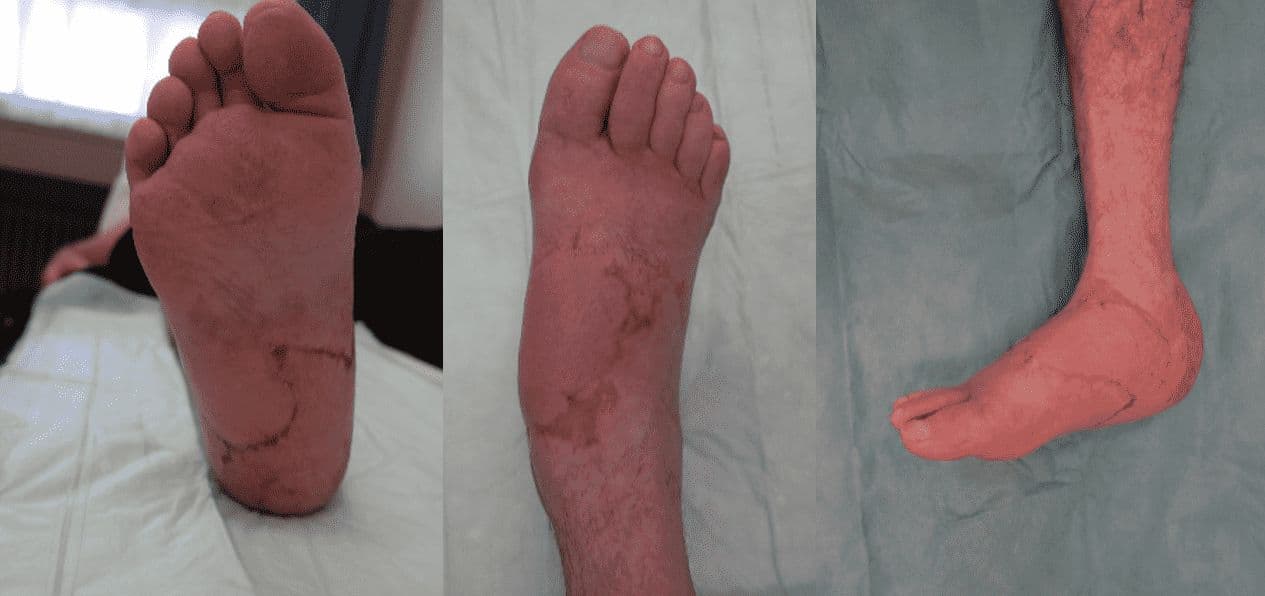
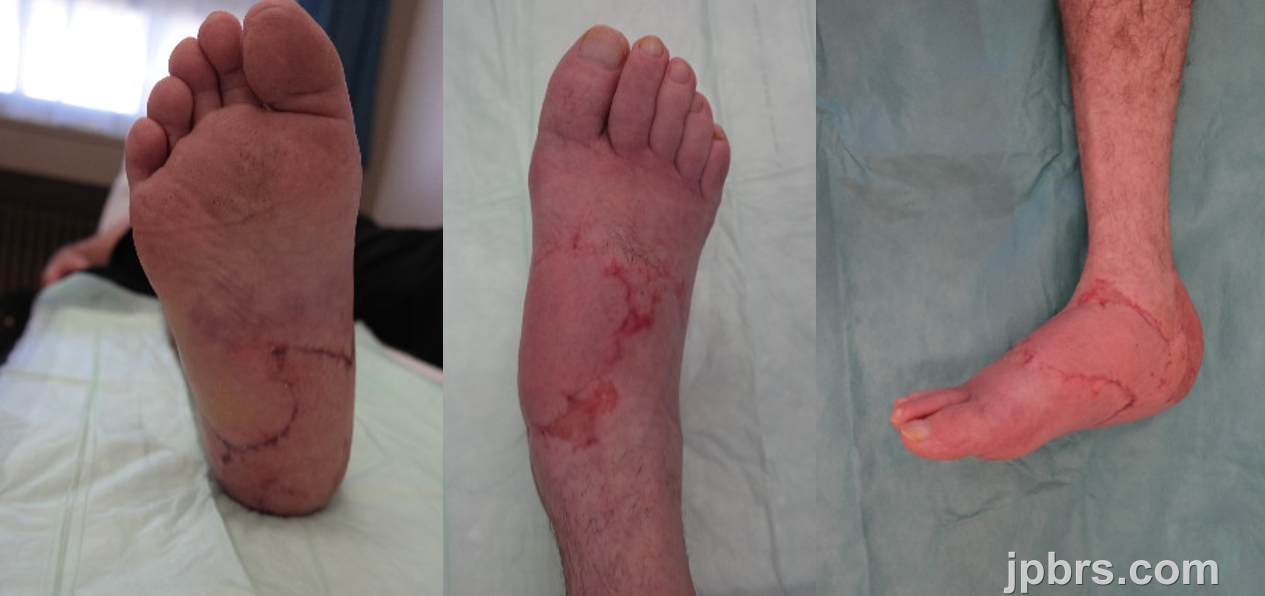
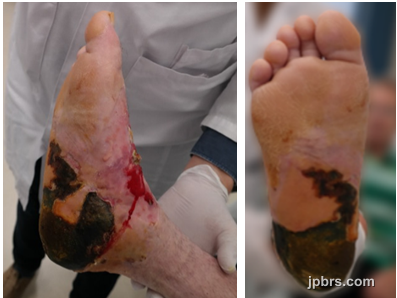
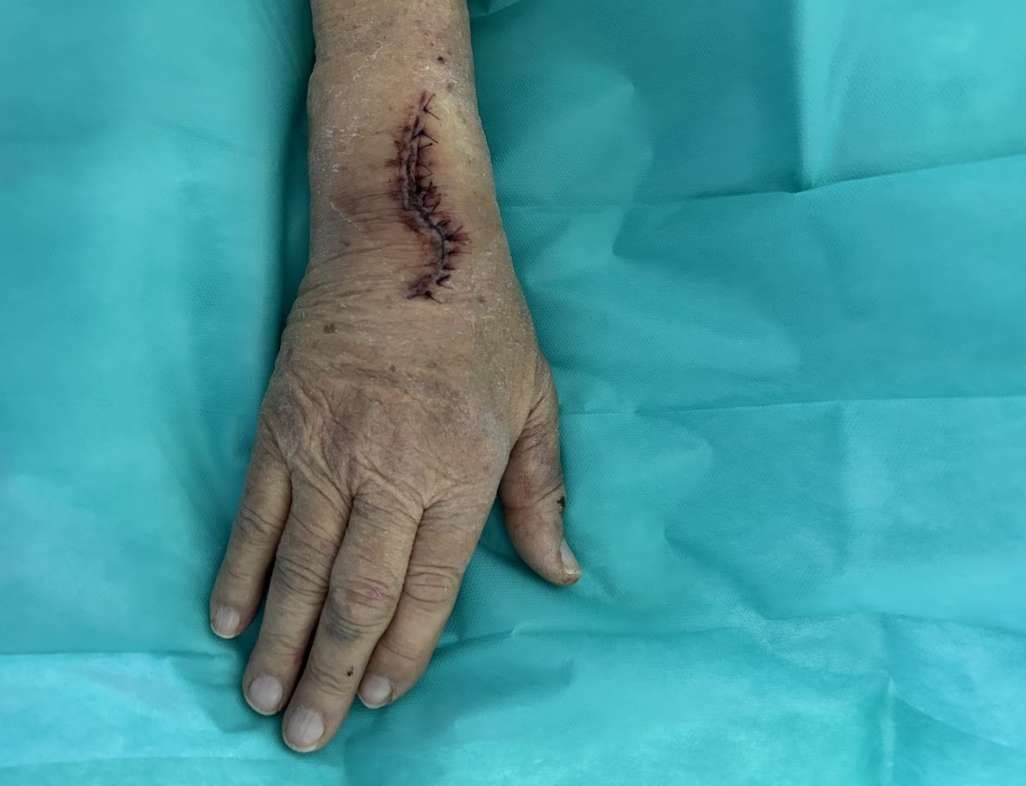
The reconstruction of complex soft tissue injuries with exposed osteosynthesis material is particularly challenging in the load-bearing areas of the lower extremities. The use of free flap grafts is often the only promising option in these cases. The following preoperative considerations were taken into account:
1. The heel requires adequate soft tissue coverage and stability to withstand the high load in daily life. Flap reconstructions with a muscular component covered with mesh-graft are particularly suitable for this purpose.
2. Due to the size of the defect and the complex spreading pattern, a relatively large free microsurgical flap is required. By harvesting the latissimus dorsi muscle, large defects can be covered. To minimize donor site morbidity and ensure unrestricted shoulder function (especially adduction and internal rotation), the medial part of the latissimus dorsi muscle was preserved. The complete latissimus dorsi muscle as a free microvascular flap is usually too bulky for defect coverage, so splitting the muscle is a suitable approach.
3. To cover the defect in the dorsum of the foot, we need a thin, small, and easily moldable flap. The distal slips of the serratus anterior muscle are well-suited for this purpose. Thus, we have opted for a combined free microvascular flap with shared vascular supply.
4. For anatomical walking, proprioceptive feedback is of critical importance. Therefore, the sensory connection of the flap reconstruction should also be considered.
5. To be able to wear regular footwear after the reconstruction, the integration of the flap into the surrounding tissue is essential.