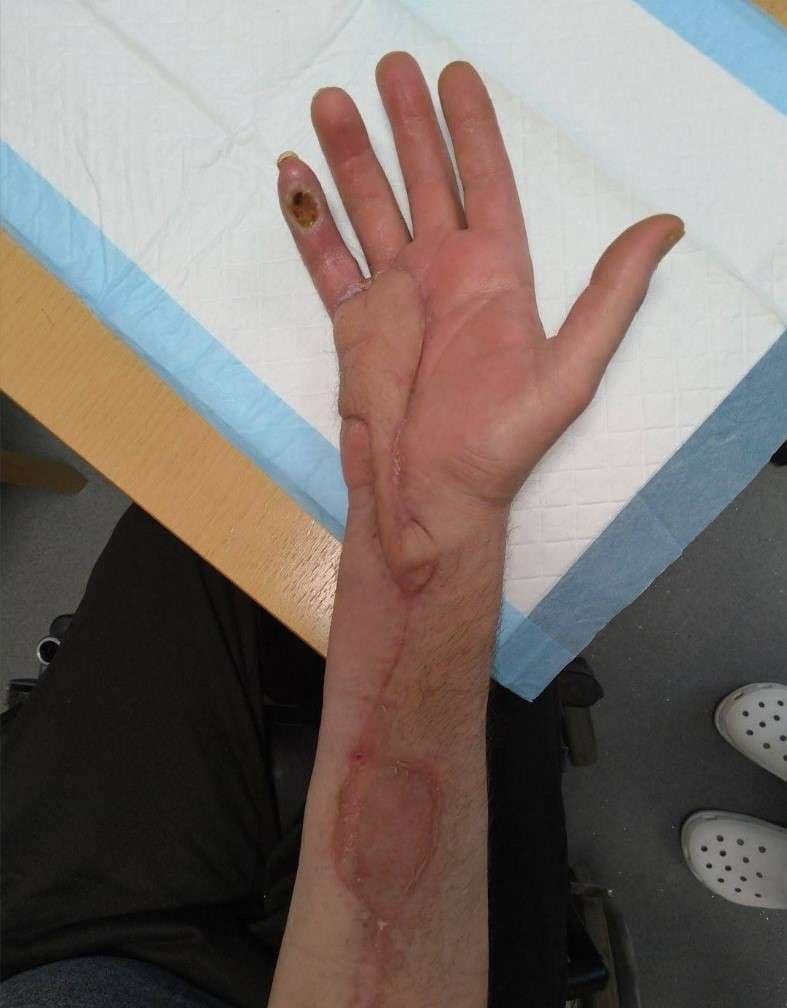
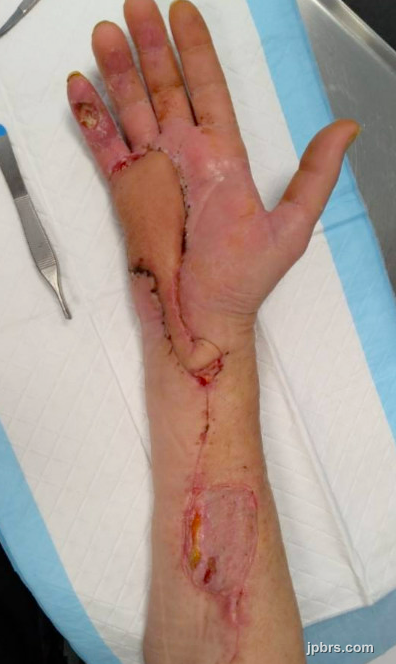
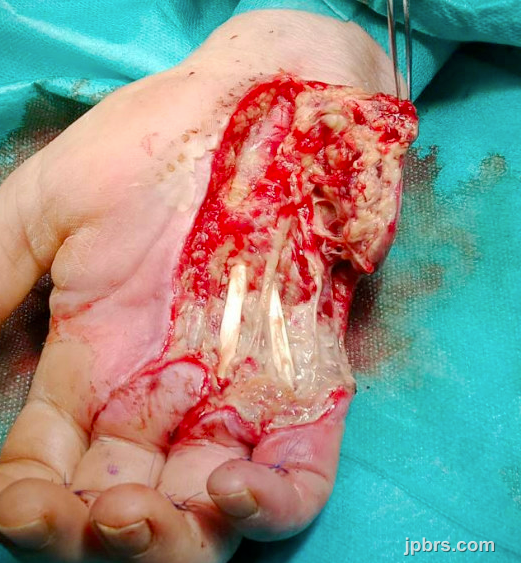
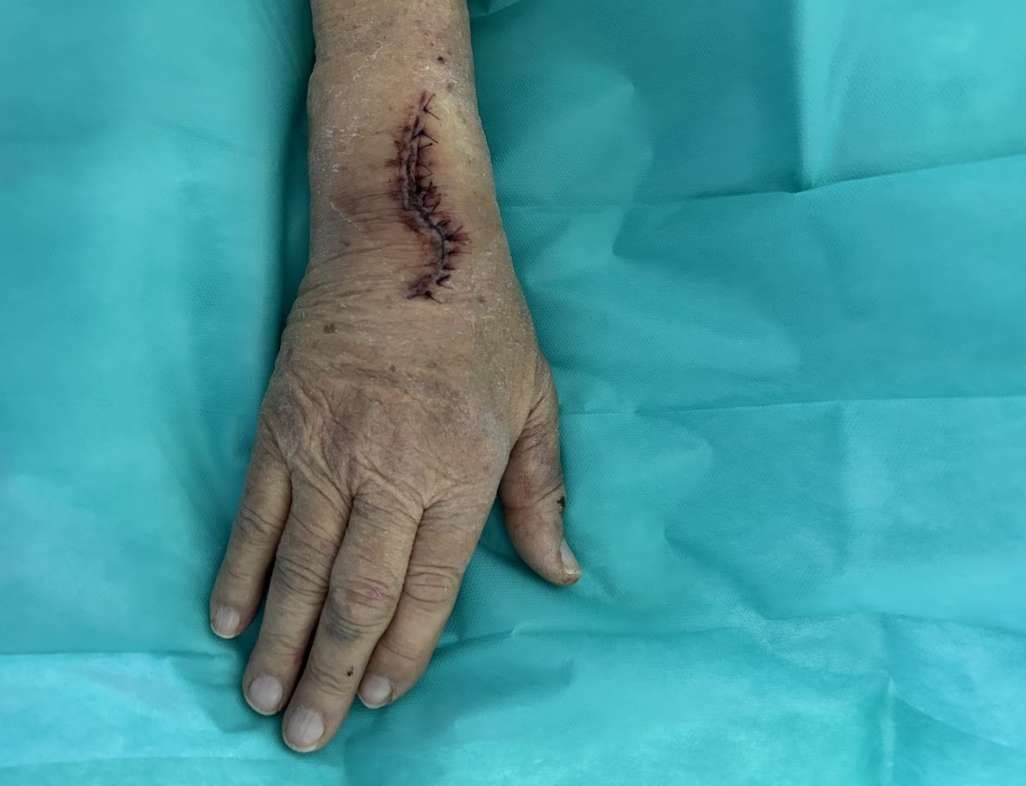
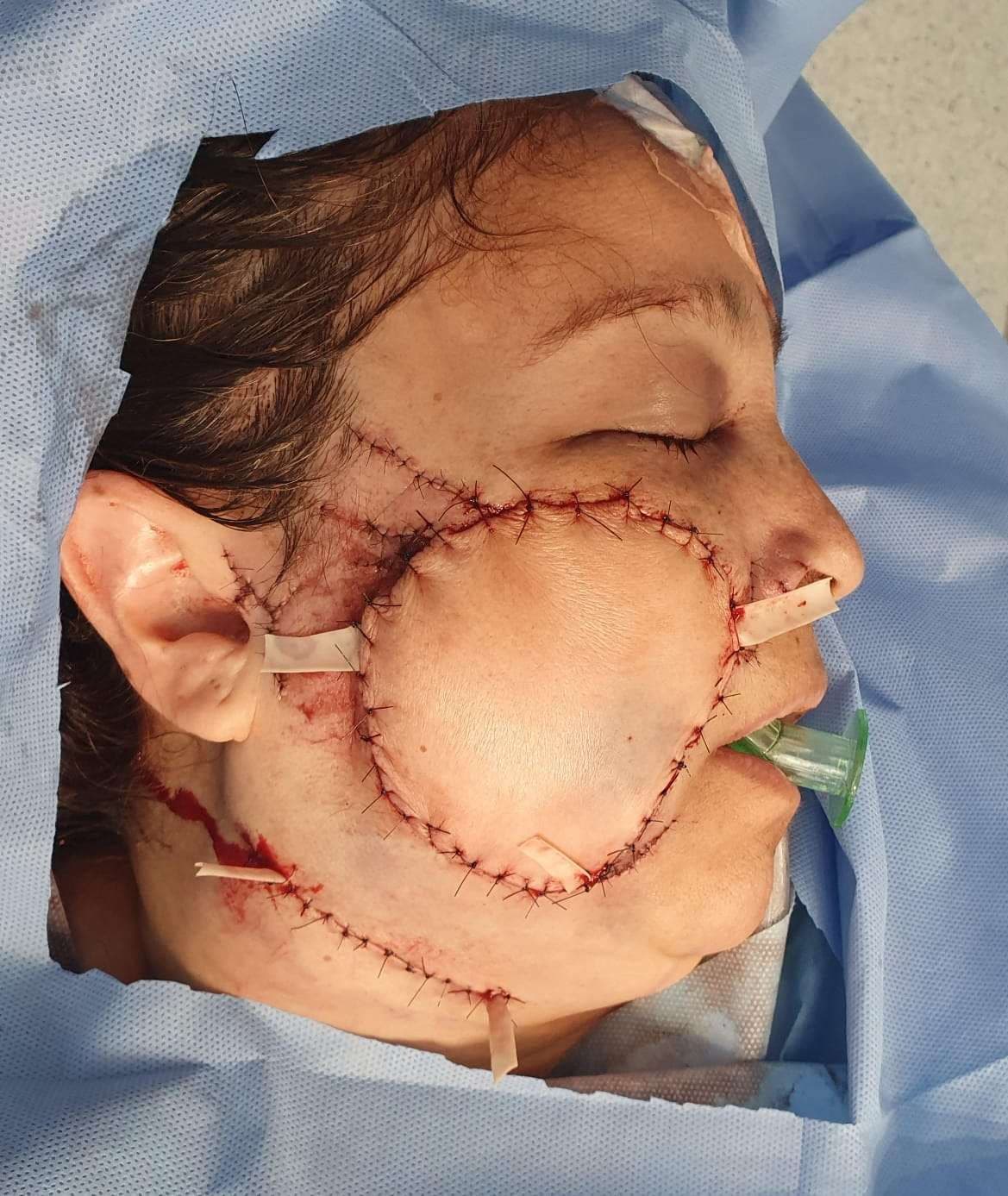
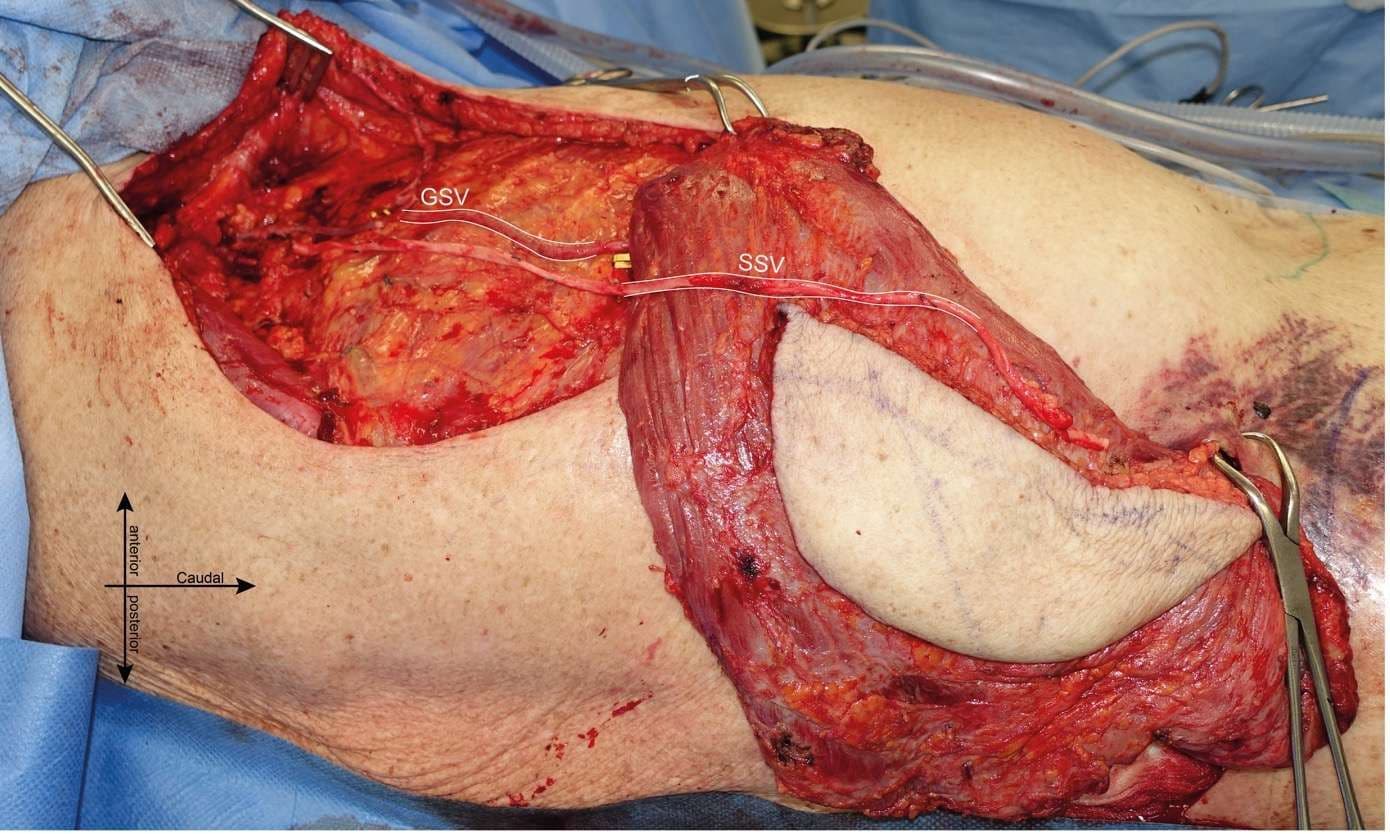
The patient was hospitalized seven days after the surgery in the ward.
Immediate Postoperative Care (the first 24 hours after surgery)
Flap monitoring involved assessing color, capillary refill, turgor, and temperature every hour for the first 24 hours to detect vascular compromise early, as a dusky, pale, or congested flap may indicate arterial insufficiency or venous congestion. Limb positioning was maintained with the right hand elevated at heart level using a soft dressing and splint to minimize swelling while avoiding excessive pressure on the pedicle. Antiplatelet therapy with for example aspirin may could be considered if there is concern for microvascular compromise, as it can help maintain blood flow. Pain management included the use of acetaminophen or NSAIDs for mild pain, with opioids reserved for breakthrough pain if needed. IV cloxacillin 1 gram every 6th hour was administered the first 3 days due to previous pyogenic infection of the right hypothenar and unregulated diabetes.
Early Postoperative Period (1–7 Days)
Flap viability monitoring continued but with a frequency of about every 4–6 hours to assess for signs of ischemia or congestion. Hand immobilization was continued, using a splint to prevent excessive tension on the flap and pedicle while avoiding excessive wrist flexion or extension. The patient was seen by a physiotherapist underlined the importance of early mobilization, which should focus on encouraging shoulder and elbow range of motion to prevent stiffness while limiting wrist and hand motion to avoid disrupting the flap.
Intermediate Recovery (1–4 Weeks)
Gradual hand rehabilitation began with passive range of motion exercises after 7–10 days, progressing to active range of motion after 3–4 weeks. Wound healing monitoring was done during routine clinical control appointments in a out-patient setting to assess for infection and wound dehiscence while also assessing status of the flap.
Long-Term Recovery (1–3 Months and Beyond)
Physical therapy should be encouraged for the patient to engage in occupational therapy and hand therapy to restore grip strength, dexterity, and fine motor function.