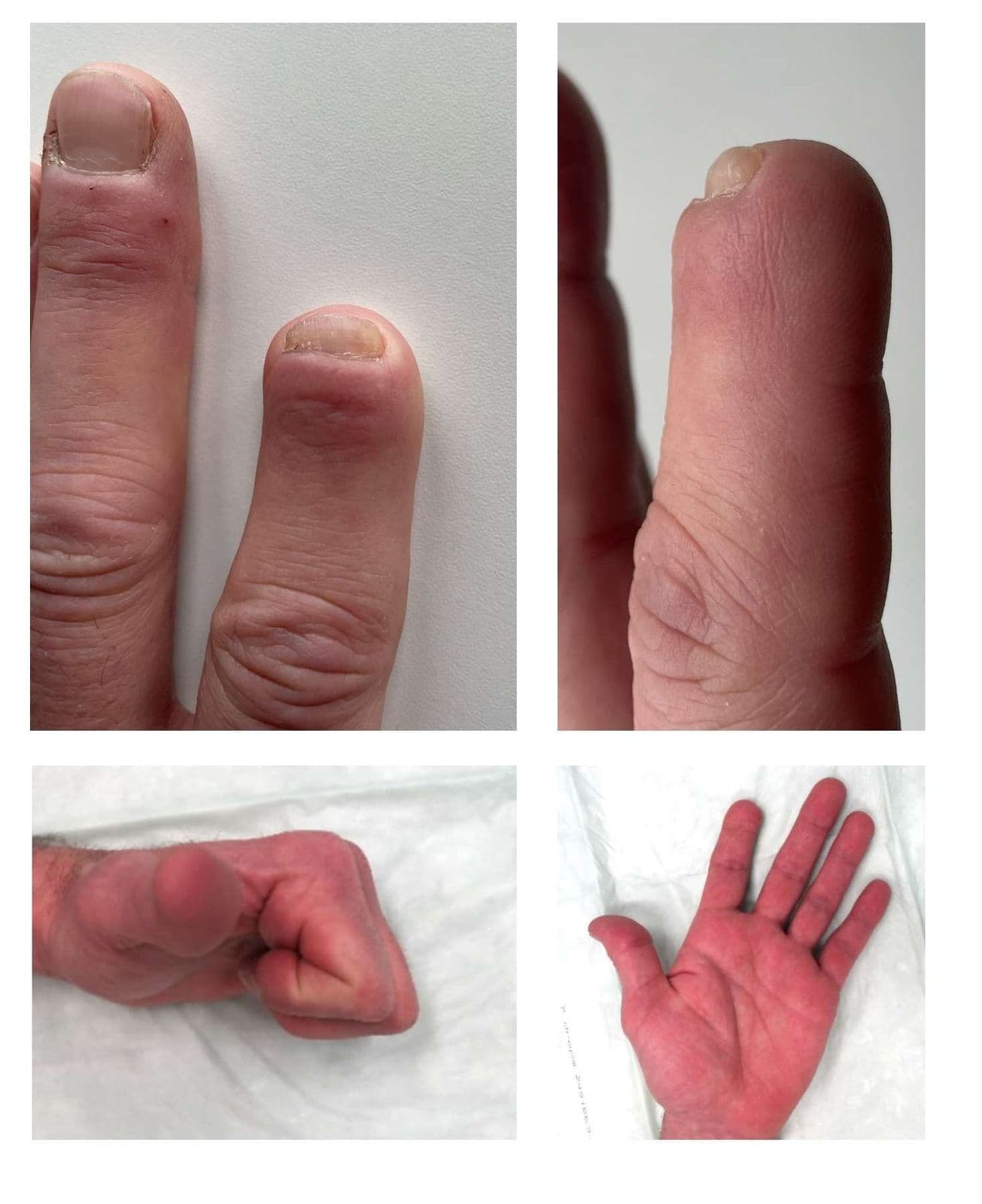
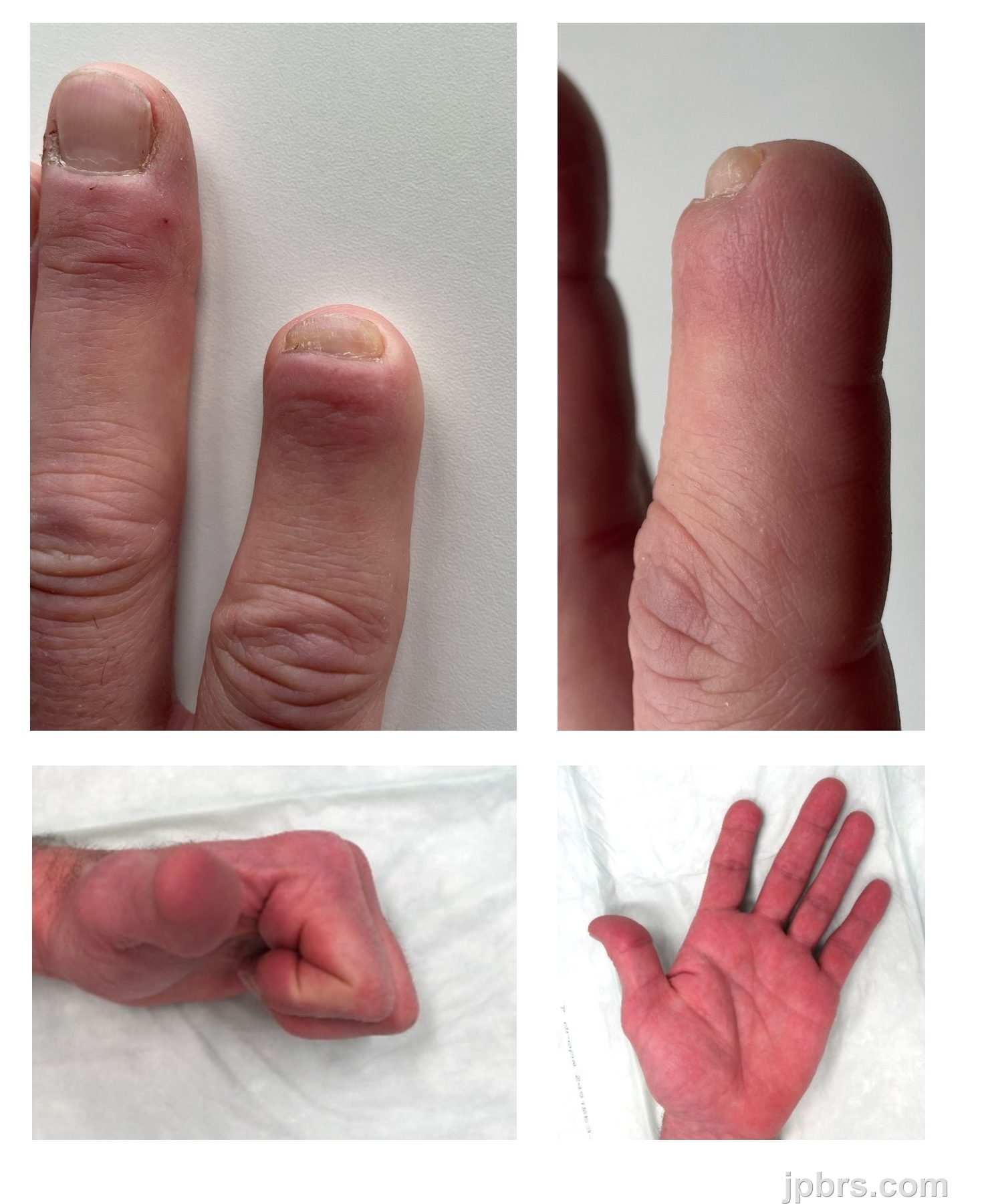
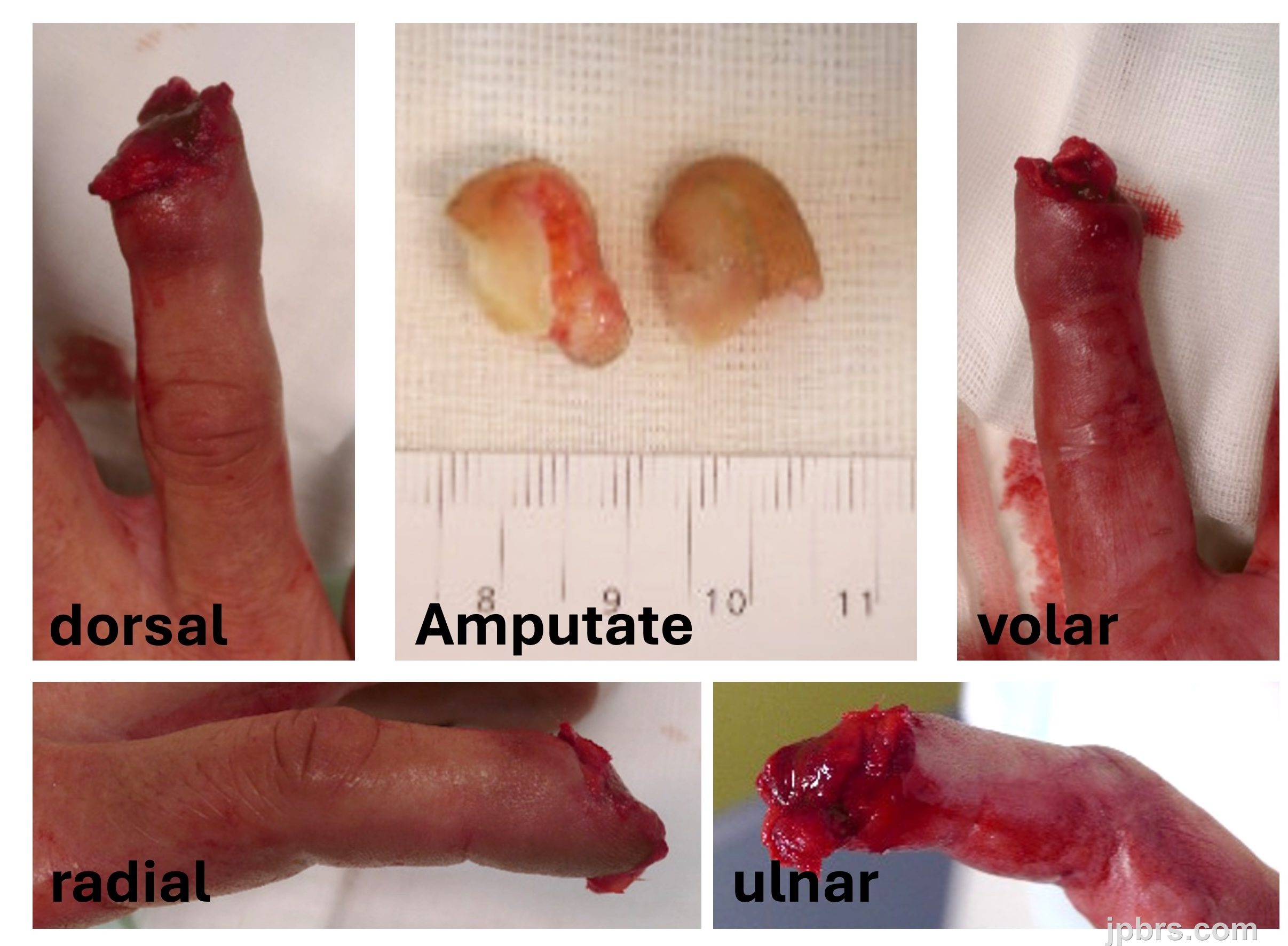
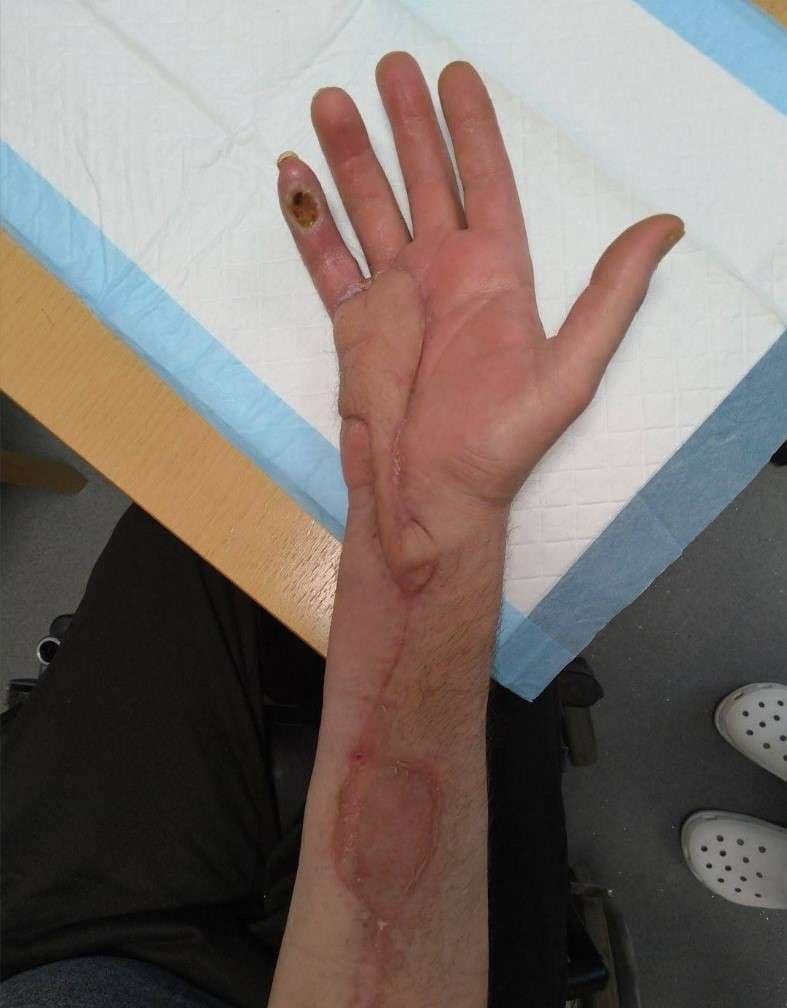
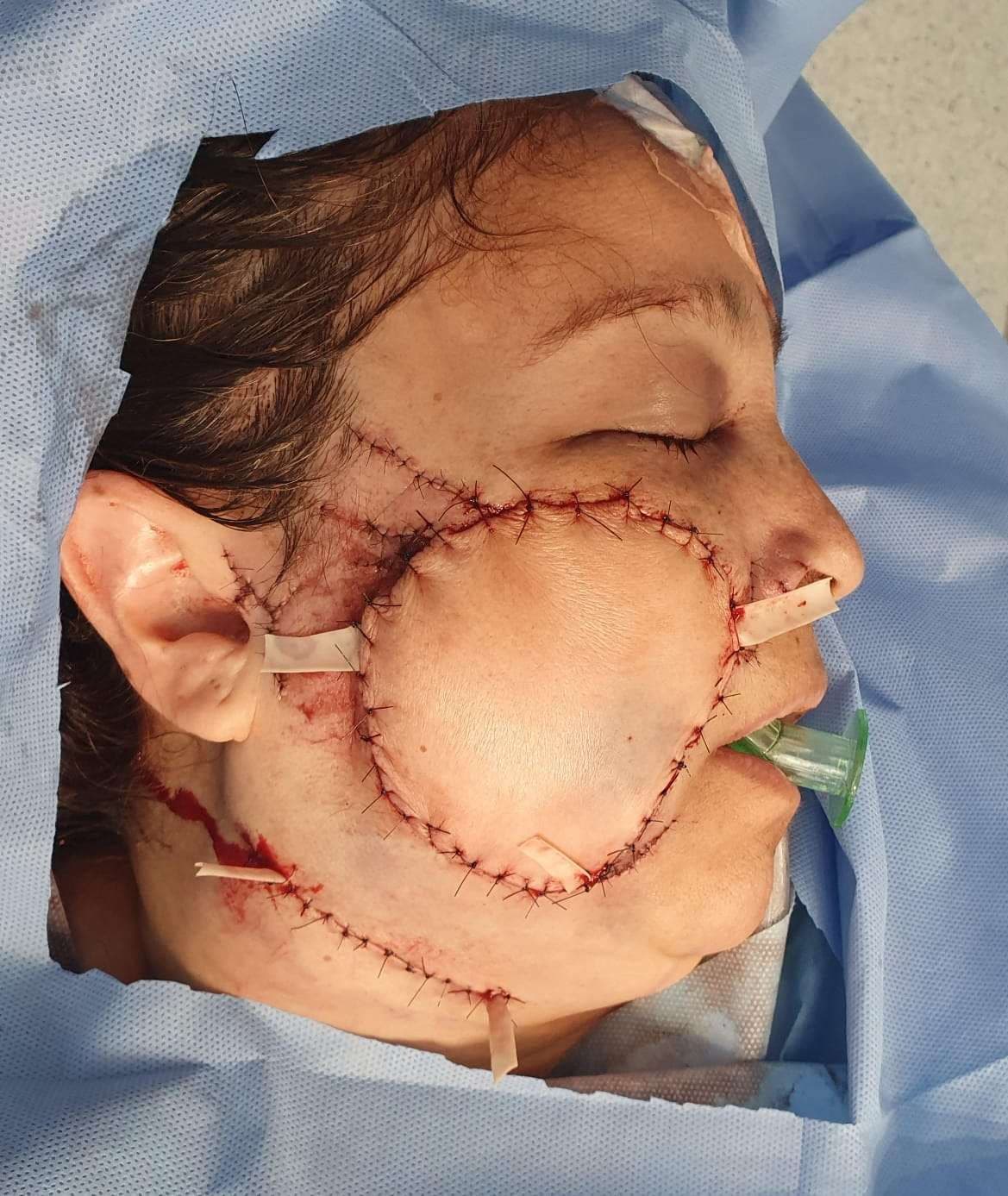
The fingertip amputation was classified as an Ishikawa Zone 2 or Allen Type III injury (Tos et al. 2024).
In this case, there was an ulnar oblique defect of the pulp, subtotal laceration of the visible nail bed, and a bony defect with bone exposure. With the remaining function of the DIP joint, sufficient attachment of the deep flexor and extensor tendons was assumed.
There are several options to treat the injury, which should be adapted to the patient’s wishes and requirements and taken into account when considering individual treatment. The main goals of treatment are restoration of sensation and durability in the tip and assuring proper bone support to allow nail growth. In addition, an optimized healing time and an acceptable cosmetic appearance are important. Several treatment options for fingertip amputations in general should be considered (Peterson et al. 2014):
1. Replantation of the fingertip: This method can be an effective treatment, especially for sharp Tamai I and II lesions (Venkatramani et al. 2011). In our case, the amputate was split into two parts and was unsuitable for replantation.
2. Secondary wound healing ((semi-)occlusive dressing): Although this treatment method has shown effectiveness for various injury patterns, it yields the most favorable aesthetic and functional outcomes when used for Allen level I injuries (Peterson et al. 2014). One reason for poor aesthetic outcome can be the lack of bony support to the nail. With additional wound contracture this may result in hook nail deformity. Secondary wound healing has its limitations in volar oblique injuries, exposed bone, additional fractures of the distal phalanx, and large soft tissue defects.
3. Bone shortening, eradication of nail matrix, and stump formation with direct wound closure: This method shortens the length of the finger and does not preserve the nail. It is necessary in more proximal amputations, when replantation is not possible. In our case, the stability of the fingertip was crucial; therefore, our goal was to maintain nail growth.
4. Local flap coverage (advancement flaps and neurovascular island flaps): Local flaps are an effective solution for managing fingertip amputations, as they enable maintenance of finger length and provide adequate bone support and soft tissue coverage. These flaps address the palmar defect and should be paired with an eponychial flap to enhance nail length and improve fingertip stability.