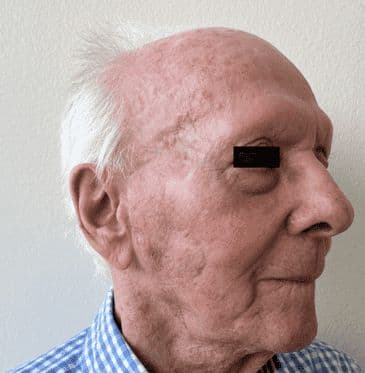
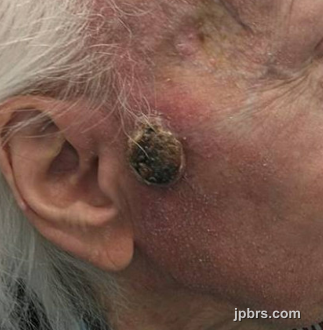
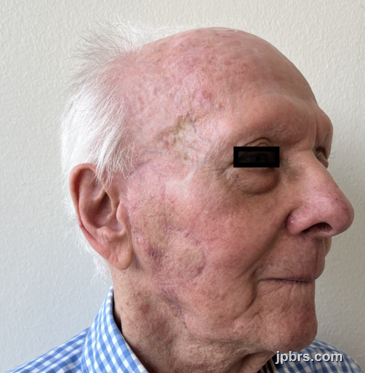
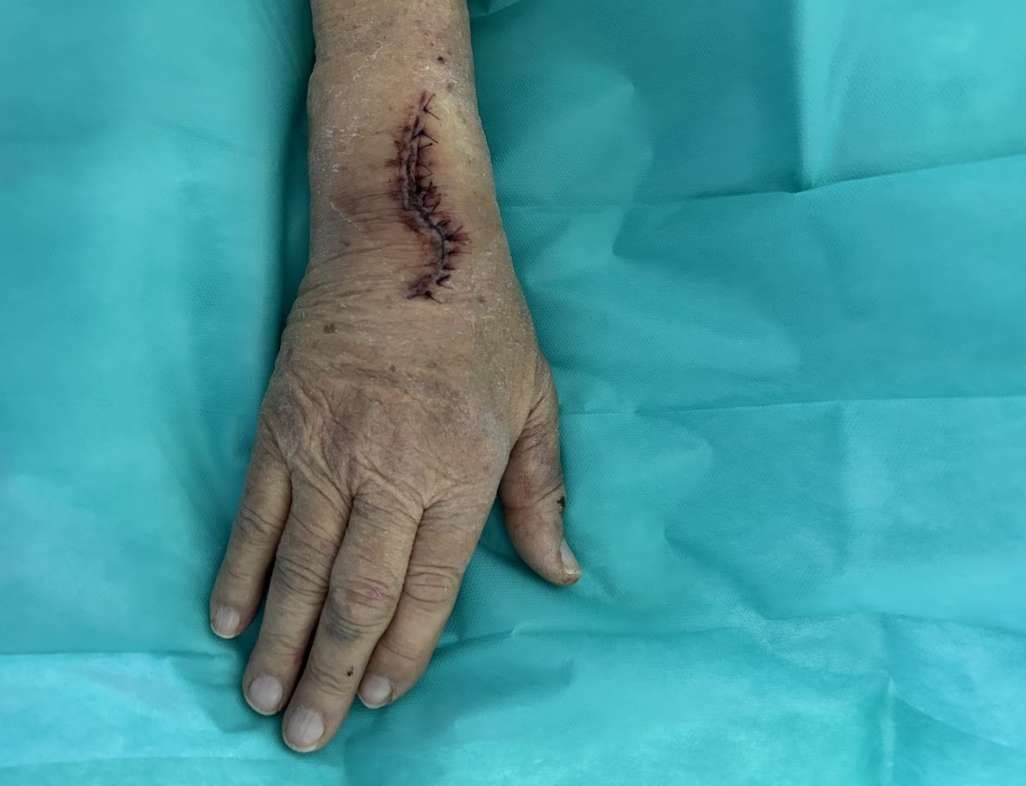
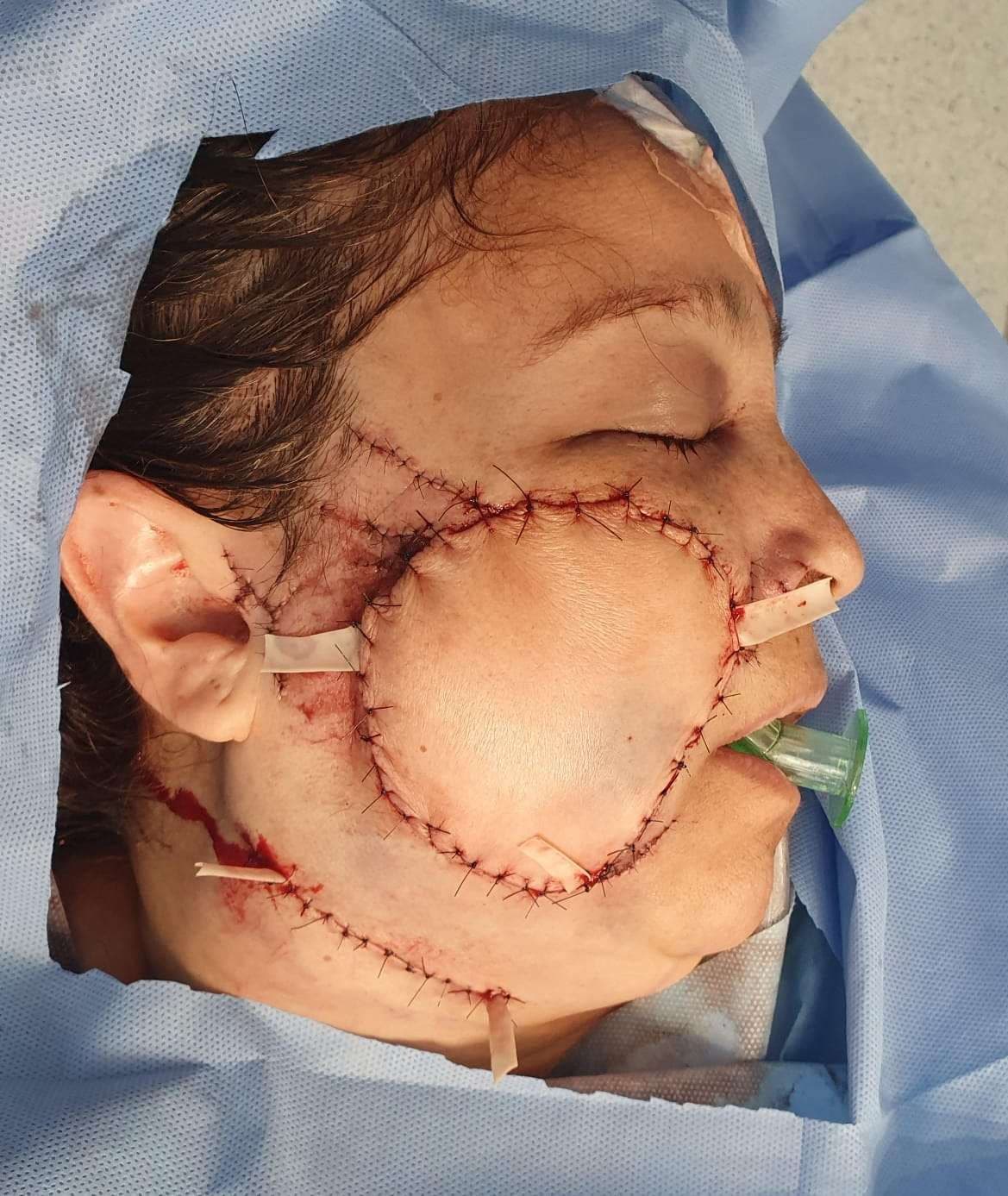
Due to the tumor size, scar from previous carcinoma surgery in the affected area, including a FTSG on the right temple, a direct closure was not possible. Reconstruction with a full-thickness skin graft could potentially result in a noticeable depression because of the excision depth and a color mismatch, which would make the scar more visible. Sufficient skin laxity was found inferior to the defect, in the mandibular region, and a reconstruction with a local flap after free frozen sections was chosen as a method of reconstruction.
The bilobed flap is a versatile and reliable local flap that provides excellent aesthetic outcomes. This technique offers an effective approach for reconstruction of not only nasal defects, but also larger skin defects on other areas of the face.
The bilobed flap was chosen as the preferred reconstructive approach because of its ability to provide adequate coverage of the defect while allowing for primary closure of the donor site. Additionally, the defect was located away from the central facial region, minimizing the visibility of scarring upon healing from the selected donor site. Furthermore, the patient had sufficient tissue laxity in the caudal regions, particularly around the submandibular and cervical areas IIa and IIb (1).
PATIENT INFORMATION:
The patient was pre-operatively informed about the risks of bleeding, infection, flap necrosis, erythema, hematoma, temporal and zygomatic nerve damage, sensory disturbance, and changes of facial expression and sensation.