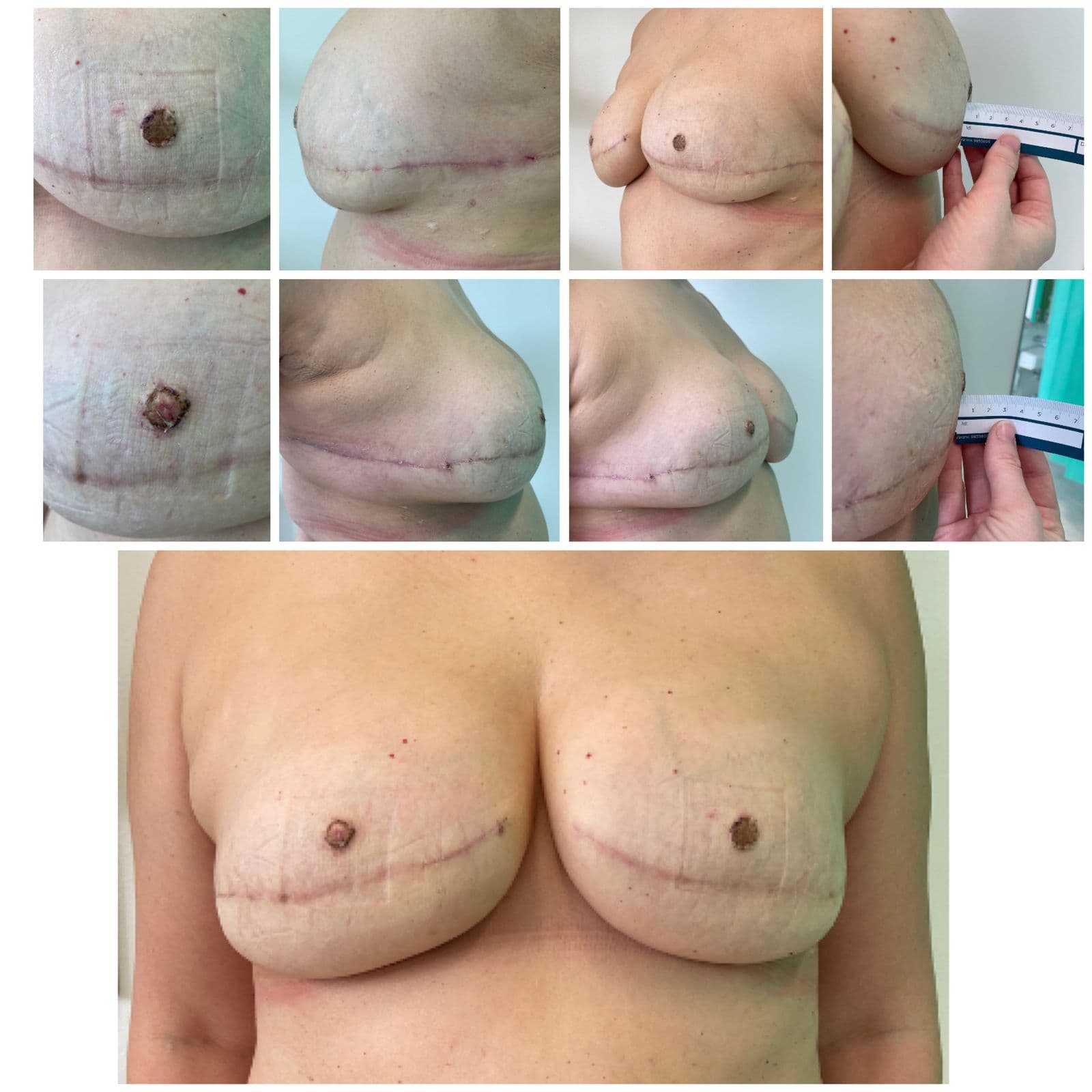
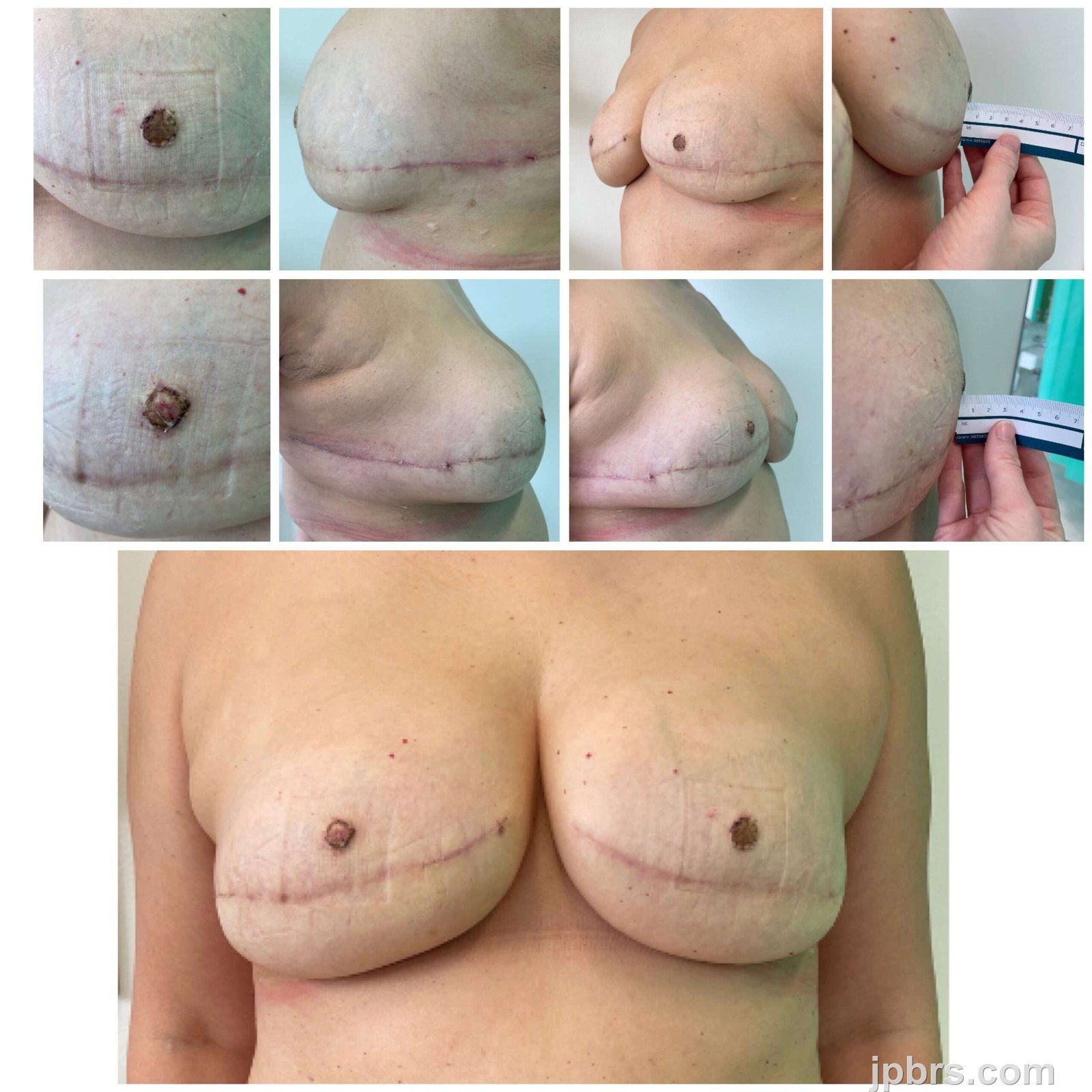
To complete the breast reconstruction, papilla reconstruction was indicated. Several techniques are available, including local flaps and skin grafts, each with specific advantages and drawbacks. In Denmark, the "Tennessee flap," a modified version of the "C-H flap," is frequently used. This flap is typically designed with a height of 1–1.3 cm but is known to shrink significantly over time. Although simple and safe, it relies solely on local skin, often resulting in compromised breast projection and a flattened contour. These changes can complicate accurate placement of the reconstructed papilla. Moreover, the technique introduces two additional scars adjacent to the papilla. Existing surgical scars may also affect flap viability, as raising local flaps too close to scar tissue increases the risk of necrosis and reconstruction failure.
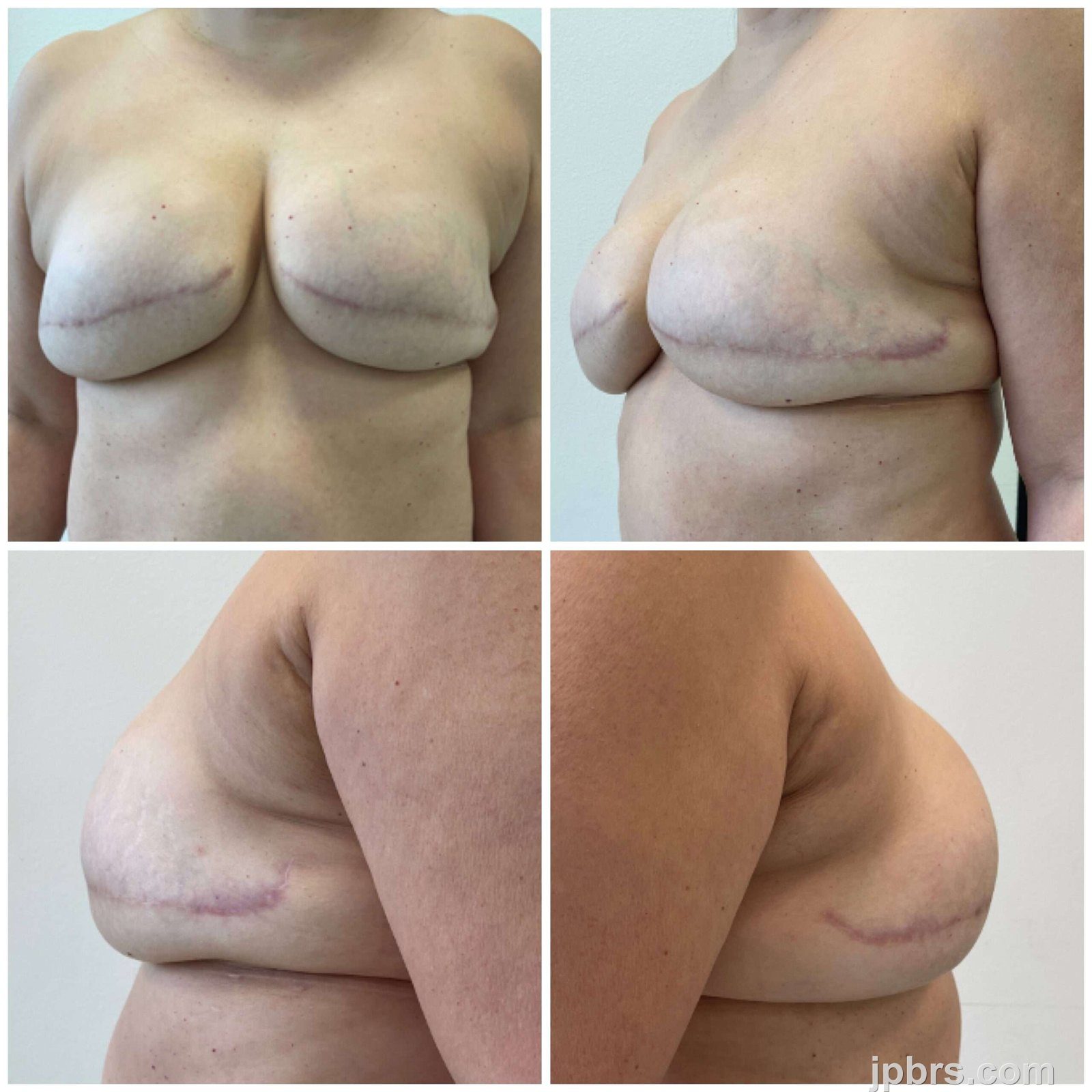
In this case, the patient’s squared breasts and flattened projection made the Tennessee flap suboptimal. She also exhibited lateral skin excess and fullness, which required correction to achieve a more natural contour. These features made her a suitable candidate for the "flower flap" reconstruction—a new technique combining four small local flaps and a full-thickness skin graft that includes some subcutaneous tissue. This method produces a low papilla (approximately 3-5 mm), which undergoes minimal shrinkage, preserves breast projection, and utilizes skin from dog ear excisions.
To address lateral breast fullness, the lateral scars needed to be extended. The patient's preferences were considered, and she accepted the scar elongation as a trade-off for reduced fullness. The medial dog ear on the right breast could be corrected without further scar extension. Papilla placement was determined collaboratively with the patient in front of a mirror, taking planned skin corrections into account.
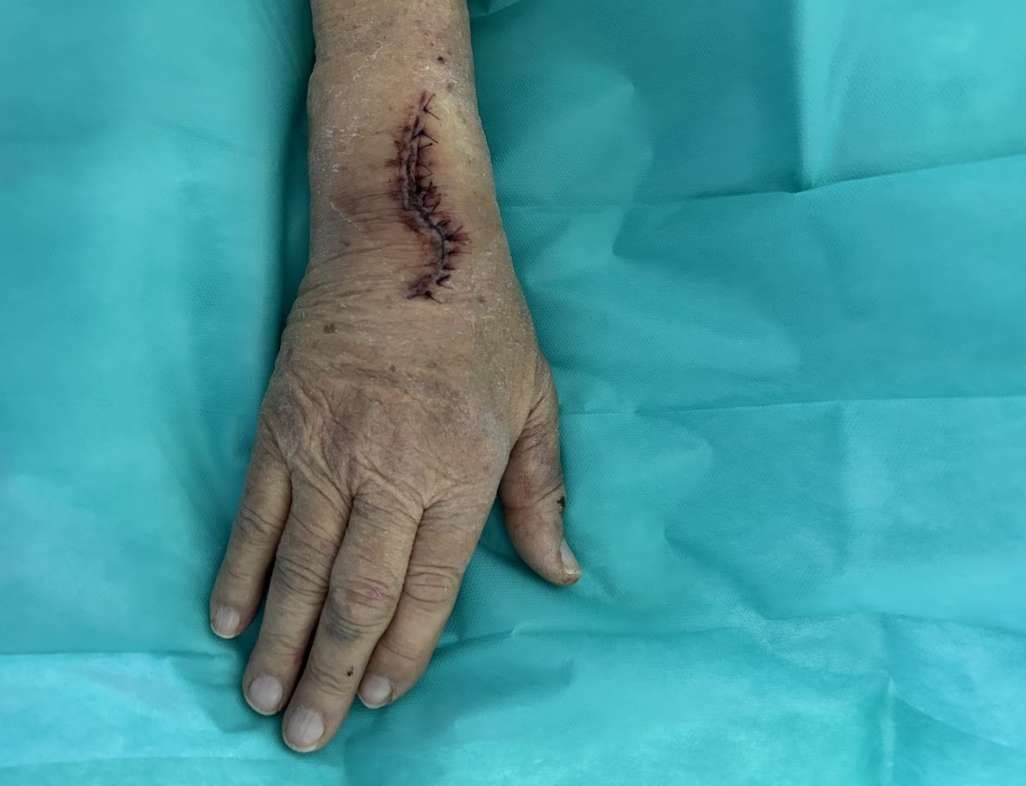
A thick skin graft containing subcutaneous tissue increases the risk of graft failure but provides additional height. Since the graft was harvested from skin that would otherwise be discarded, the consequences of failure were minimal. Additionally, the patient expressed interest in correcting dog ears on the abdominal scar. Although not part of this procedure, this site could later be used as a graft donor if needed.